Business Name:
TREE TRIMMING SAN ANTONIO
Address:
4511 Horizon Hill Blvd, San Antonio, TX 78229
Phone:
(726) 227-4061
Tree Risk Assessment starts with a practical choice: monitor a cracked limb, prune it to reduce weight, or remove the tree before it reaches a roof, fence, or power line. Tree Trimming San Antonio can inspect the trunk flare, branch unions, cavities, and lean, then explain the exposure. Monitoring preserves canopy and avoids immediate noise, while pruning or removal brings chainsaws, a chipper, and temporary driveway disruption in exchange for reducing a known failure point. Learn more about our San Antonio tree trimming.
An inspection can also end with no cutting: photographs and a written priority list may be enough if the defect is minor and the target is distant. Pruning usually means a few hours of saw noise and branches moving through a gate; removal can occupy a driveway longer and may require rigging lines over a garage. The key distinction is not tree height alone, but the combination of decay, target distance, root condition, and room to place debris.
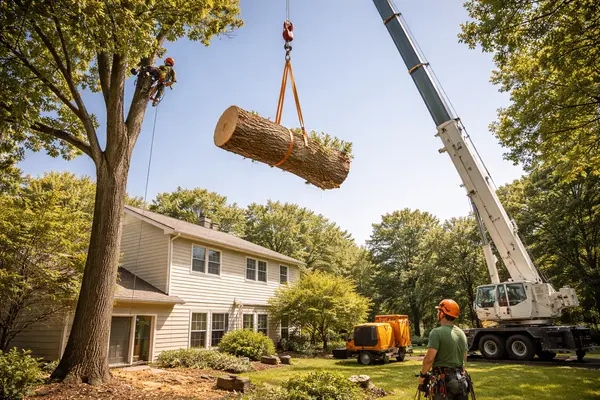
After you contact the office, the visit begins with a walkaround of the root zone, trunk, crown, nearby rooflines, and service wires. The arborist notes deadwood, fungal fruiting bodies, bark seams, soil heave, and branch loading, then marks a drop zone. A discussion follows: canopy thinning can reduce sail area, while a split union or decayed root plate may call for a different scope. Climbing gear and binoculars help inspect defects that cannot be judged from the lawn. Contact Us for a free, no-obligation quote.
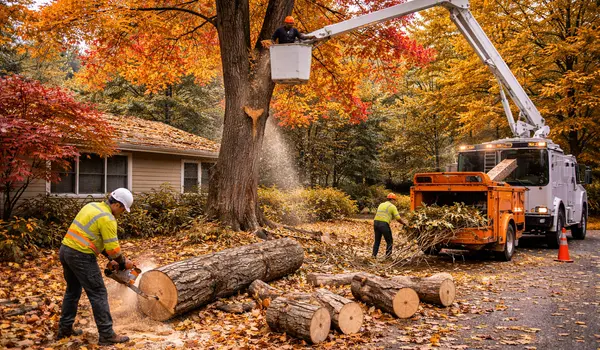
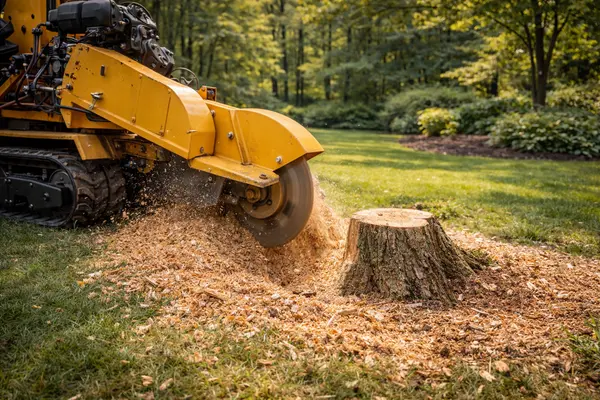
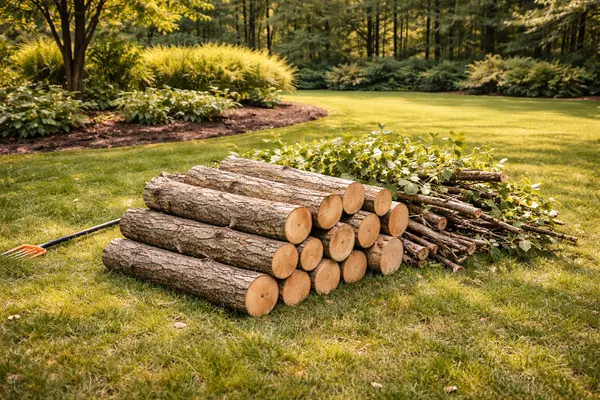
Before cutting, crews protect gates, patios, and planting beds and position ropes, rigging lines, and, where access permits, a crane. Sectional felling lowers limbs in controlled pieces rather than dropping them across a shed or pool. Chainsaws make the cuts; a chipper processes brush for haul-off. The crew can then complete stump grinding below grade, rake chips, and remove larger wood, leaving the site ready for its next use.
A shallow lean is not automatically a failure, but new soil cracks, lifted roots, fresh saw cuts, or a widening trunk seam change the assessment. Previous topping can leave long, weak sprouts; old cabling may conceal decay or shift load to another union. A tree standing alone has room for a broad drop zone, whereas the same diameter over a tile roof needs controlled lowering. Those conditions affect both the recommended action and the equipment on site. Learn more about our expert Stump Grinding services.
Some hazards need observation through a windy season; others, such as a hanging limb above a driveway, need a prompt work plan. Rain-softened soil may prevent a crane from crossing a lawn until mats or drier ground are available. If removal is selected, Stump Grinding depends on root flare size, irrigation lines, and the desired finish: leaving a low stump is faster, while grinding opens the area for sod or a new planting.

Tree Risk Assessment itself may be a short site inspection, but the cost of correcting the finding varies sharply. A small limb reachable from open ground can take a compact crew and chipper; a tall tree over a house may need a climber, rigging blocks, traffic control, crane access, and several truck loads. That second scope can run roughly two to four times the labor and equipment of straightforward pruning because every section must be lowered, not dropped.
Access often moves the total as much as trunk diameter. A 24-inch trunk behind a narrow gate may require hand-carried sections, while a larger tree beside an open alley can be handled more efficiently. A written estimate should separate inspection, pruning or removal, crane or climbing labor, rigging, debris chipping and haul-off, stump work, site protection, and disposal. It should also state what happens if hidden decay, buried wire, or additional unstable limbs are found after work begins.
TREE TRIMMING SAN ANTONIO
4511 Horizon Hill Blvd, San Antonio, TX 78229
(726) 227-4061
Hours of Operation
Open 24 Hours