Business Name:
TREE TRIMMING SAN ANTONIO
Address:
4511 Horizon Hill Blvd, San Antonio, TX 78229
Phone:
(726) 227-4061
Waiting on Tree Disease Treatment can turn a manageable canopy problem into a larger safety issue. Dead limbs do not regain strength, and a leaning trunk can shift further after saturated soil or high wind. Tree Trimming San Antonio can assess the tree before a branch reaches a roof, fence, driveway, or power line. A small patch of cracked bark may be worth monitoring, but fungus at the base or fresh root damage should not be treated as a wait-and-see condition. Learn more about our tree trimming in San Antonio, TX.
Some symptoms stay relatively stable for a season, particularly minor leaf spotting on an otherwise solid young tree. Others remove options: once decay has hollowed a main limb union, pruning may no longer leave enough sound wood to preserve that branch. Storm breakage can expose raw wood to insects and moisture, while roots damaged by trenching may cause decline weeks or months later. Early inspection helps determine whether treatment, pruning, support, or removal makes practical sense.
Take clear photos of the canopy, trunk, bark cracks, fungus, and any mushrooms around the root flare. Note when you first saw leaf loss, dripping sap, branch dieback, or a new lean, along with recent construction, irrigation changes, or storm damage. Mark the tree on your property survey if a fence or neighboring lot is close. If you have discussed Tree Cabling before, point out the limbs or unions that concern you so they can be examined directly.
Move vehicles, patio furniture, grills, planters, and toys out of the work area, ideally leaving a 10- to 15-foot access path where possible. Keep gates unlocked and let household members know that chainsaws, chippers, and falling debris may create noise. Do not cut large dead limbs yourself, scrape away bark, pile soil over exposed roots, or apply random chemicals. Those actions can hide disease symptoms, worsen root stress, and make diagnosis more difficult.
Following Tree Disease Treatment, it is normal to see pruning cuts, a thinner canopy, wood chips, or temporary stress in the first several days. A treated tree may not leaf out evenly until the next growth cycle, especially after canopy thinning or removal of dead limbs. Keep mulch 2 to 4 inches deep but several inches away from the trunk, and water the root zone during dry stretches. Tree Transplanting may require more frequent moisture checks because moved roots take time to reestablish.
Call back if the trunk develops a stronger lean, new cracks open in major limbs, or fungus at the base expands after rainfall. Soft soil, exposed roots, sudden leaf wilt, and branches breaking without a storm can signal continuing root damage or internal decay. Routine attention matters: inspect the canopy after strong winds, avoid striking roots with mowers or trenching equipment, and schedule pruning before crowded limbs begin rubbing through bark.

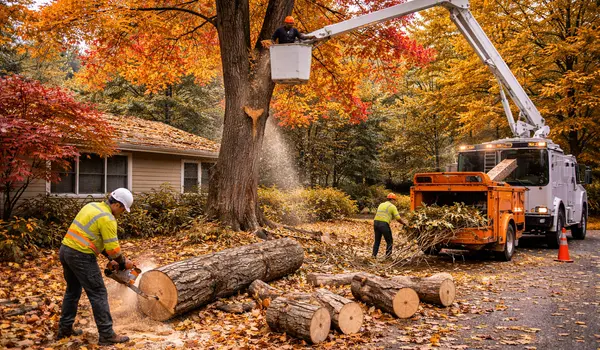
The visit begins with an inspection of the trunk, root flare, canopy, nearby structures, and access route. The crew identifies dead wood, fungal decay, cracked bark, and branches that could fail over a roof or fence. Climbing gear, rigging lines, and chainsaws are selected based on the tree’s height, condition, and drop zone. For a severely compromised tree, sectional felling removes it in controlled pieces rather than dropping a full trunk where it could damage a structure.
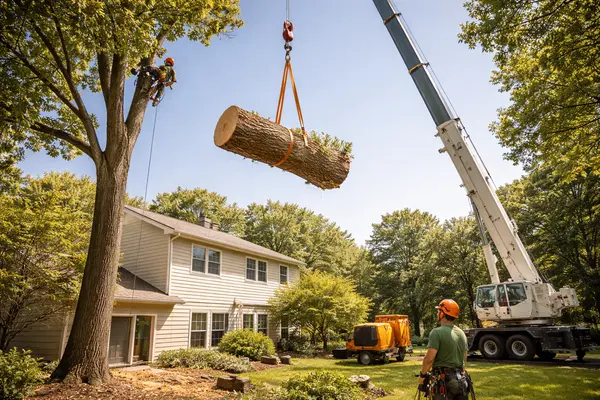
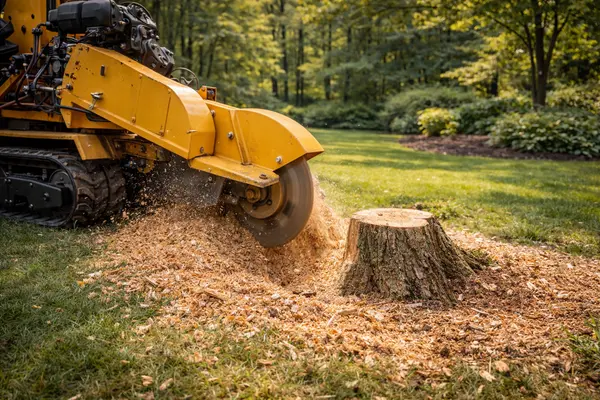
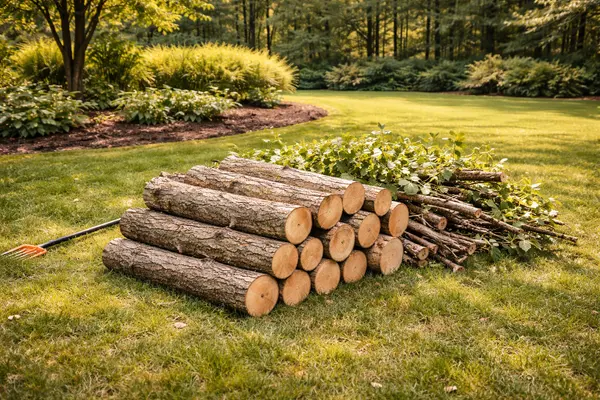
Branches over homes, sheds, or utility-adjacent areas are lowered with rigging over structures, while open yards may allow a crane to lift larger sections clear. Canopy thinning can improve airflow and reduce weight on sound limbs without stripping the tree. Cut material goes through chippers for manageable cleanup, and larger logs are moved from the site as arranged. If removal is necessary, stump grinders work below grade to break down the remaining stump and surface roots.
TREE TRIMMING SAN ANTONIO
4511 Horizon Hill Blvd, San Antonio, TX 78229
(726) 227-4061
Hours of Operation
Open 24 Hours